
Cork vs Dublin is a topic that can leave any visitor scratching their head wondering which city to visit first. This guide will help you pick your favorite as both have their own charm in very different ways. The atmosphere, the vibes, and the culture will give you a real feel for what makes each city special.
People in Dublin are always on the move. Time feels tight, and conversations are quick, like the city itself is running late. In Cork, life slows down. You see people sitting comfortably with a coffee, watching the sky change, chatting about the weather and complaining about it with a smile. The contrast becomes even clearer when you travel between the two cities, as explored in this guide from Dublin to Cork.
Dublin is Ireland’s capital, and its heartbeat is impossible to ignore. It is busy, loud, and wonderfully chaotic. Events, concerts, protests, nightlife and ambition fill every corner, and Dubliners carry that capital city energy with pride. The scale, the pace, and the many famous institutions make it feel unmistakably important.
Cork, on the other hand, feels like home. It is smaller, friendlier, and more personal. You are more likely to recognise faces, stop for a chat, and enjoy the simple pleasure of unhurried time. Even visitors notice how welcoming it feels, whether staying locally or discovering the best B and Bs in Cork.
Both cities feel proudly Irish, yet they live at very different rhythms. One thrives on momentum, the other on moments, and that is exactly what makes comparing Cork and Dublin so fascinating.
Cork vs Dublin: People, Culture, Food, Castles and the Price of Daily Life
The People
Dubliners are sound, once you get past the rushing. Life in the capital can feel like a constant sprint, so people are always on the move. They’ll help you with directions, but they might do it while already walking away.
Cork people will stop. They’ll chat. They’ll ask where you’re from, who your parents are, and whether you’ve had your dinner yet. You didn’t ask for this information exchange, but you’re in it now. Relax. Dublin is efficient and friendly, and Cork is enthusiastic and friendly.
Food: Fancy vs Feckin’ Delicious
Dublin’s food scene is international, experimental, and trendy. You want Korean-Irish fusion served on a slate with a backstory? Dublin’s got you. It’s the place where menus use words like “artisan,” “bespoke,” and “reimagined.”
Cork’s food scene is deeply proud of itself—and honestly, fair enough. The English Market alone has enough personality to qualify as a local celebrity. Cork food is about quality ingredients, strong opinions, and zero apologies. If something’s good, Cork will tell you. If it’s not, Cork will also tell you.
Dublin eats with ambition. Cork eats with confidence.
Dublin Vs Cork: Cost of living
Cork is generally more affordable, especially on rent, dining out, childcare, and entertainment, often translating into a lower overall cost of living for similar lifestyles. Dublin remains the most expensive city in Ireland, particularly due to high housing costs and overall price levels.
When we think about Cork vs Dublin, one of my friends who recently shifted to Cork said it’s approximately 1-5% cheaper than Dublin.
And you can get 1 bed house for approximately €1,200 in Cork, where in Dublin a 1-bed home is a minimum for €1800. Moreover, for lifestyle essentials and groceries in Cork, you can get more cheap products in comparison to Dublin. In the case of public transport, you will experience the same scene; moreover, in the case of electricity and heating, the cost is low in Cork.
Cork Vs Dublin Culture and Nature: What Sets Them Apart
Cork vs Dublin, when it comes to culture and nature, it is really a case of polish versus freedom. Dublin’s culture is loud, literary, and front-and-centre. There are museums, theatres, and history on display. Nature in Dublin is neat and accessible, with places like Phoenix Park and the coastal walks offering green escapes that are well-signposted and well-trodden.
Cork, meanwhile, wears its culture more casually with strong accents, local music, deep traditions, and a fierce sense of identity that doesn’t need a spotlight. Nature in Cork feels wilder and closer, from rugged coastlines to quiet countryside that seems to spill right into daily life. Where Dublin curates its culture and nature, Cork just lives in them.
Where Cork and Dublin Locals Love to Go
Phoenix Park is basically Dublin’s biggest parks for adults and kids. Compared to Fitzgerald’s Park in Cork, it’s like the overachieving sibling who runs marathons for fun. Phoenix Park, one of the best parks in Dublin , stretches on forever with wide roads, open fields, and deer casually wandering about like locals.
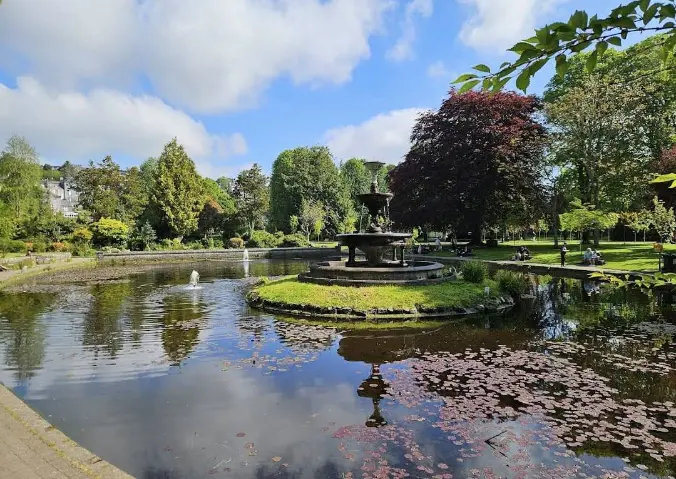
Fitzgerald’s Park, on the other hand, is more Cork-sized perfection: riverside paths, pretty bridges, flowerbeds, and a vibe that says “grand, let’s stroll, no rush.” Phoenix Park is epic; Fitzgerald’s Park is charming, both great, just very different energies.
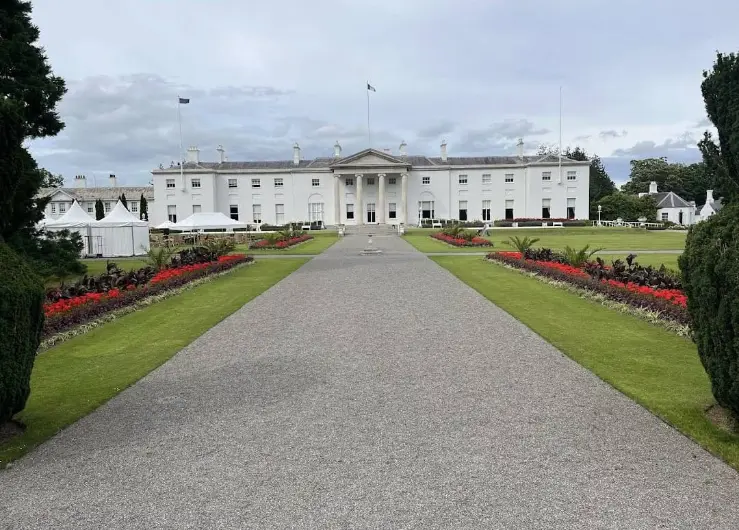
The National Botanic Gardens feel like they belong in a glossy magazine. Every plant looks like it woke up early and put effort in. In Cork terms, think of them as the polished version of wandering around the Lee Fields.
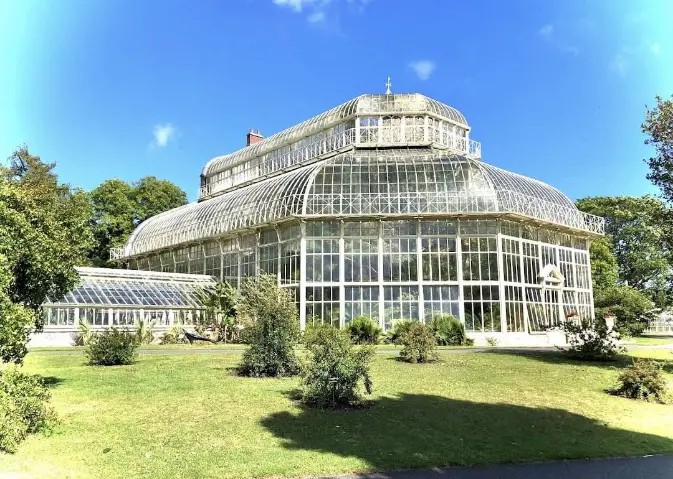
While the Botanic Gardens are curated, labelled, and quietly impressive, the Lee Fields are more relaxed and free-spirited. Long grassy stretches by the river where people walk dogs, picnic, or stare into space dramatically. One is a very “educated plant enthusiast,” the other is “sure this’ll do nicely.”
St Stephen’s Green is Dublin’s classic city-centre park. This place is neat, tidy, and always busy, like it’s constantly hosting a lunch break reunion. Cork’s closest equivalent is Bishop Lucey Park, smaller but equally central and always buzzing.
Both are places where people sit with coffee, watch the world go by, and feel briefly disconnected from traffic, even though it’s right there. St Stephen’s Green is the polished postcard version; Bishop Lucey Park is the compact, no-nonsense Cork take blink, and you’ve walked through it, but you enjoyed it.
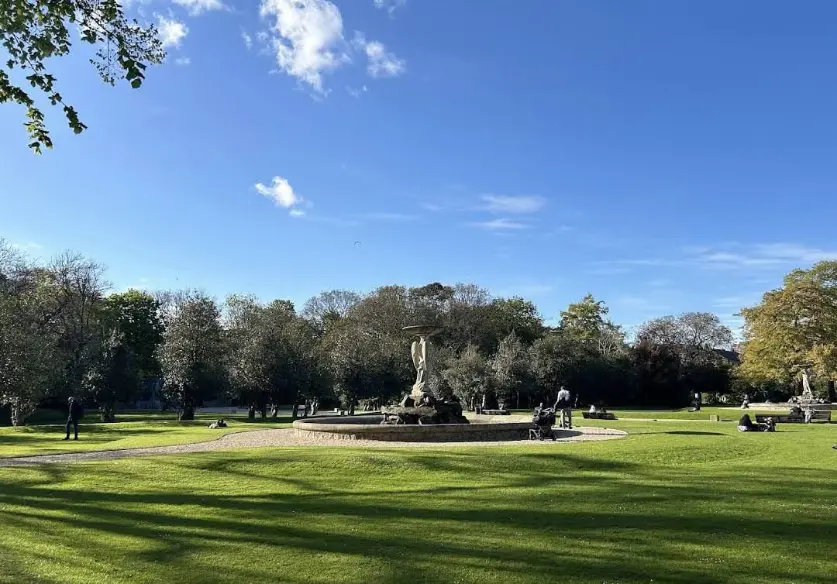
Then there’s Iveagh Gardens, which feels quiet, hidden, and slightly mysterious; it’s best compared to Ballincollig Regional Park in spirit. Iveagh Gardens are smaller and more secretive, perfect for reading, thinking, or escaping noise, while Ballincollig opens up into woodland trails and riverside walks that make you forget you’re near a city at all. Both are for people who like their green spaces calm, a bit underrated, and not trying too hard.
Castles of Cork vs. Dublin
The castles of Cork and Dublin reflect very different sides of Irish history. While Dublin’s castles are closely tied to English rule and government power, Cork’s castles are more scattered and strongly connected to local clans, defence, and everyday life in the countryside.
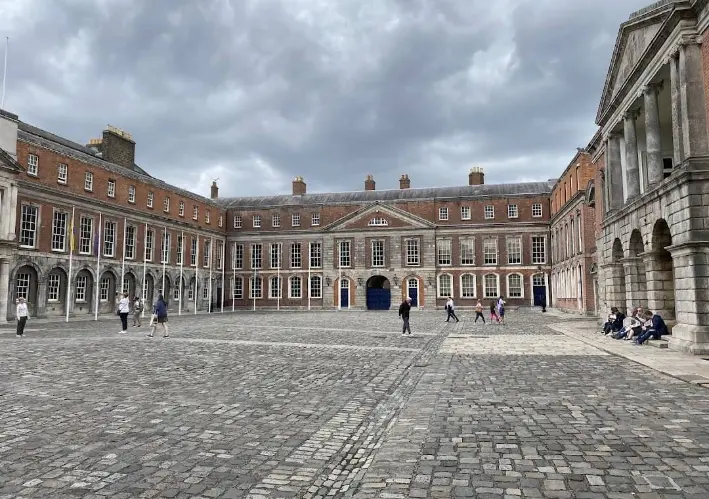
Dublin Castle is the most famous castle in the capital and was the centre of English administration in Ireland for centuries. Built in the early 13th century, it symbolised control rather than protection, serving as a seat of government instead of a battlefield fortress. Because Dublin was a major political and economic hub, its castles were fewer in number but grander in design, focusing on authority, ceremony, and administration rather than constant warfare.
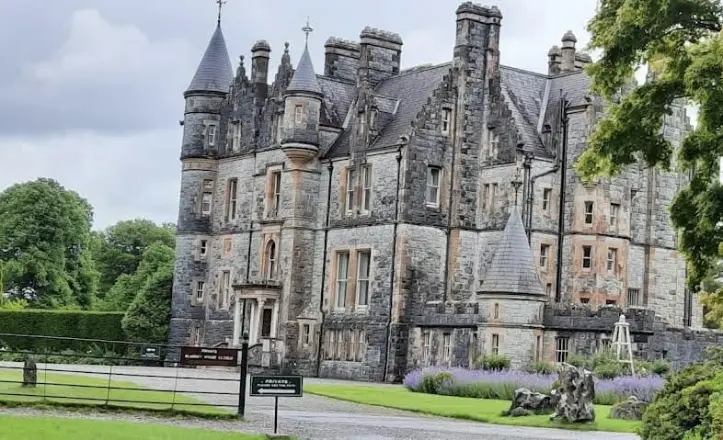
Cork, by contrast, is known as the “county of castles,” with over 100 castles spread across its landscape. Most of these, such as Blarney Castle and Blackrock Castle, were built by powerful local families or clans. Cork’s castles were often practical and defensive, designed to protect land, trade routes, and coastal areas from attack. Their location are on hills, near rivers, or along the coast. They show how important defense and survival were in a region frequently affected by conflict.
In summary, Dublin’s castles represent centralized power and governance, while Cork’s castles reflect local control and military defense. Together, they show how geography and politics shaped different castle styles across Ireland.
Cork vs Dublin: A Blend of Quiet and Loud Celebrations
Cork and Dublin both love a good celebration, but the way they celebrate often reflects their very different personalities.
Cork’s special festivities tend to feel more local, relaxed, and community-driven. Events like the Cork Jazz Festival turn the city into a cozy, creative hub, with music spilling out of small pubs, streets, and unexpected corners. Cork celebrations usually feel less polished and more personal. There’s a strong sense that they’re “by the people, for the people.” Locals take pride in their traditions, and there’s often a rebellious, independent spirit (very on-brand for Cork) running through the festivities.
Dublin, on the other hand, hosts celebrations on a much bigger and more international scale. Festivals like St. Patrick’s Festival, Bloomsday, and the Dublin New Year’s Festival are carefully organised and attract huge crowds from all over the world. Dublin’s events often include large parades, big concerts, and official programs, especially around landmarks and tourist areas. The city leans into its role as the capital, showcasing Irish culture in a way that’s designed to be seen globally.
In short, Cork’s festivities feel intimate and proudly local, while Dublin’s are grand, polished, and international. Both are lively and memorable and they just celebrate in their own very Irish ways
Interesting Facts of Cork and Dublin
Dublin is the Capital, and you will find almost all the popular establishments you have ever heard of when reading about Ireland. It’s the compact city within economic hub, Trinity College and literary history! Many people get interest to visit this city, sometimes only because it’s the birthplace of the famous literary person James Joyce.
For many reasons, Cork has the title of “Real Capital” of Ireland. Some will be surprised, but, indeed, plenty of important issues occurred here in Cork. Consequently, people of Cork have their own pride and dignity due to this. However, travelers also sometimes get in a fix, first, where to go, Cork or Dublin.
Foodies get huge interest in Cork as it’s the food capital of Ireland and home of the historic English Market. Additionally, Cork is self-sufficient and is home to Apple’s European Headquarters.
Before your Visit
So here it is. Cork is the kind of city where life moves a little slower, and you are encouraged to sit back and enjoy the moment. It invites conversation, character, and quiet discoveries, including historic gems like Charleville Castle, which adds to Cork’s timeless charm.
Dublin, on the other hand, thrives on speed, scale, and constant movement. It is bold, busy, and always doing something, carrying the energy of a capital that never truly switches off.
If you are drawn to character, warmth, and a city that feels like it knows you, Cork will call you back again and again. If you love momentum, opportunity, and a fast-moving rhythm, Dublin will keep you hooked.
And if you are wise, you will enjoy both and never admit which one you prefer. Because wherever you stand in the Cork vs Dublin debate, one thing is certain. The argument itself is half the fun.
Follow Dublinz Facebook and Dublinz Instagram to join the community and get Irish info daily!